“There is no power on earth that can prevent the growing equality of conditions from bringing the human spirit toward searching for the useful and from disposing each citizen from shrinking within himself. One must therefore expect that individual interest will become more than ever the principal if not the unique motive of men’s actions…If in becoming equal, citizens remained ignorant and coarse, it is difficult to foresee what stupid excess their selfishness could be brought to…Enlighten them, therefore, at any price; for the century of blind devotions and instinctive virtues is already fleeing far from us, and I see the time approaching when freedom, public peace, and social order itself will not be able to do with out enlightenment.”
-Tocqueville: Democracy in America, vol. II, 1840
After the Enlightenment, Man had been stripped bare and all the loyalties that used to direct his interest had been rationalized and no longer simply compelled belief. Country, family, religion: everything had been robbed of its mystical force and all that was left was the naked Self. In the State of Nature, it was found that Man’s two most basic motivating instincts are Self-Preservation and Self-Interest and, despite all the exhortations of Moralists and Priests over the last two millennia against them, these two dirty little Passions in the end it seemed trumped all the others. An experiment was began that attempted to substitute for unrealistic Virtue a new doctrine known as Enlightened Self-Interest, or, as Tocqueville put it, Self-Interest Well Understood. The Enlighteners lowered the bar of expectations because it was thought that since it does not appear possible to make Man good, maybe we can at least make him less bad.
This idea is most simply summed up by Adam Smith’s (author of The Wealth of Nations, the Capitalistic handbook) famous dictum: "It is not from the benevolence of the butcher, the brewer, or the baker, that we expect our dinner, but from their regard to their own self-interest. We address ourselves, not to their humanity but to their self-love, and never talk to them of our own necessities but of their advantages.” It was an attempt to build a Society on a more “natural” foundation-—based on how Men actually act, instead of how they ought to act. It was a simple appeal to Men’s Reason that stated: “I will respect your Right to do and think whatever you want, as long as you can do the same for me.”
Enlightened Self-Interest, as opposed to Self-Interest simply, is a nuanced distinction. It requires a new type of education—it is not necessarily something "natural"—and, if not properly cultivated, it will be consumed by greed and Self-indulgence. As Tocqueville points out in the passage quoted above, this new type of Society is built on the precipice of a very slippery slope, and if Enlightened Self-Interest ever degenerates into pure Self-Interest, the entire schema will fall apart. If everyone begins acting only according to their own myopic Self-Interest, then we are right back to the Hobbesian “War of All Against All”—the avoidance of which was supposedly the whole reason Man contracted into Societies in the first place.
Rousseau however, did not believe that Man could ever exercise such a thing as “Enlightened” Self-Interest, and that the Bourgeois—his name for the new type of Man created by these ideas—was a despicable being caught between two respectable extremes: Natural, Self-sufficient Man in the State of Nature; and the De-natured, Moral Citizen of the ancient republics of Greece and Rome. The Bourgeois simply fakes public benevolence in order to further his own selfish, private ends. Man’s passion for himself can never rationally be overcome.
According to Rousseau, Reason would always lead the Enlightened Man to the conclusion that, “it is useless for me to try to reconcile my interests with that of others; everything you tell me about the advantages of the social law would be excellent if, whilst I was scrupulously observing it toward others, I could ensure that they would all observe it towards me. But what assurance can you give me on this?…Either you must give me guarantees against any unjust undertaking, or you must not expect me to abstain from similar actions in my turn.” His proof of this claim is that this is “precisely how any sovereign society reasons when it is accountable for its conduct to no one but itself.”
But where does that leave us today, in this world that has now become radically rationalized and radically individualized? Rousseau asks, “where is the man who can separate himself from himself?” But we can never return to that fantastic (as in fantasy, as well as fabulous) golden age that immediately followed the State of Nature, where Man’s needs were few and his desires simple; nor to the peace of Amour de Soi and complete Self-sufficiency and independence. We are inescapably destined for the chains of “Civil” Society and the burdens of inter-dependence; for the daily interactions and the “Hell,” according to Sartre, “[that] is other people.”
Tocqueville was a big fan of Rousseau but knew that what he prescribed was limited and most likely unrealistic. Rousseau knew this as well—at least the limited part—and explained that what he was advocating could only work in very small, homogeneous communities, with strict moral codes and complete abandonment of the Individual Will to the General. In Democracy in America, Tocqueville tried to apply the insights of Rousseau to the exceptional situation (now known as American Exceptionalism) that had resulted in America and give us some advice as to how to combat the problems of Self-Interest and Radical Individualism that could be a resultant of our system.
What kind of education or ”enlightenment” can adequately combat these forces and attenuate the purely selfish potentialities inherent in Human Nature? Or conversely, if you don’t even believe there is such a thing as Human Nature (which would make education even more important), what needs to be taught in order to direct the Individual towards caring about the Common Good? In Rousseau’s book on education, the Emile, he very carefully goes through, step by step, how he would go about shaping the desires of an Individual from infancy through adulthood in order to reconcile him to Society and attenuate his purely selfish desires—which he saw as innate. He never does this, however, through appealing directly to the child’s Reason. Instead, he plays upon the desires of the child and very carefully, and unbeknownst to the child, leads him to the conclusions and the lessons that Rousseau wishes to instill in him.
Although the Emile is a work of fiction, Rousseau very convincingly shows how it would be possible to achieve this necessary goal, but, in the real world, we could never have an educational system as thorough as the one proposed by Rousseau, nor enough educators as patient and clever as the one portrayed in this novel. I believe however that it is possible to do a better job than we are now and that what we are currently teaching to children exacerbates the problem as opposed to alleviating it. Yes of course creativity and self-esteem should be encouraged in kids, but above all what needs to be instilled in them is a sense of their responsibilities and duties to others. As I have stated previously, kids don’t need to be taught to be more concerned with themselves; they naturally will be so either by Nature—Self-preservation/Self-interest—or by Nurture—they are already the center of the world that everything in their life revolves around.
What we need is a new attempt at cultivating an Enlightened Self-Interest that can make Man realize his responsibilities and duties, while appealing to his love of Self to achieve it. History has so far revealed Liberal Democracy to be the best and most stable of the alternatives that Modern Political Philosophy has come up with, but, as stated earlier, this schema is always poised at the precipice of a slippery slope. Today it is in our own Self-Interest to stand up for our-Selves and make a lot of changes to our System, but I don’t see how we can do that if we no longer even believe in the goodness of having a "System." The world currently contains 6.6 billion people and is growing daily. We are therefore inextricably bound to live within the confines of Society, so how should we go about ordering it? Is a Rousseauean complete Self-abnegation necessary, or can Man be taught to be reasonable enough to rationally realize the extent of his own Self-Interest and be capable of putting Self-imposed chains upon his desires?
“Men are qualified for civil liberty in exact proportion to their disposition to put moral chains on their own appetites…Society cannot exist unless a controlling power upon will and appetite be placed somewhere, and the less of it there is within, the more there is without. It is ordained in the eternal constitution of things that men of intemperate minds cannot be free. Their passions forge their own fetters.”—Edmund Burke
Friday, October 15, 2010


Friday, September 17, 2010
A Disruption in the Normal Swing of Things
What is “Culture;” or, to put it another way, what is “a Culture?” It is another one of those words in the modern American lexicon that everyone uses, but seems to have lost its content and has strayed very far from its source. Everything seems to be a Culture these days: Online Culture, Drug Culture, Gang Culture, Rock ‘n Roll Culture, Sports Culture, Corporate Culture. We’ve even acquired the incoherent phenomenon known as “Sub-Cultures,” as well—which still participate in the “real” Culture, just separately…I guess. But what exactly does it mean to participate in a Culture and how does the Individual fit into this picture?
According to Wikipedia—an example of an “Online Culture” or Community—there are generally three different definitions of what Culture means:
1) The set of shared attitudes, values, goals, and practices that characterizes an institution, organization or group
2) An integrated pattern of human knowledge, belief, and behavior that depends upon the capacity for symbolic thought and social learning
3) Excellence of taste in the fine arts and humanities, also known as high culture
As I have said earlier, Culture can generally be defined as “a shared set of assumptions that unites and binds a People.” It gives a group an inner unity of mutual ideals and a shared set of symbols through which they can outwardly express their beliefs. In the past, the foundation—the bedrock upon which it was built—of Culture was the gods that a particular People believed in and the specific “Values” that they prescribed. These beliefs, as Nietzsche puts it, were usually “superstitious custom that originated on the basis of some misinterpreted accident,” preserved by a tradition that it was considered “moral” to follow. And, if one did not strictly adhere to them, it was very dangerous for the Community because one ran the risk of angering the gods and thus calling down the vengeance of the gods upon the Community.
But the Enlightenment changed all that. It was a “conspiracy” that rejected all the Myth and Superstition that had defined all Societies and Cultures up until that point, in order to try and make a more rational and peaceful world to live in. To do this, the Enlightenment thinkers created the hypothetical State of Nature—a pre-historical time, before Man had contracted into specific groups, without any artificial cultural adornments—in order to look at Man as Man, uncolored by any human convention. Through this, they were able to show that all the loyalties that had constrained Man up till that point—strength, wealth, religion, tradition, birth, age—were all simply man-made, and hence not morally binding. They removed the veil that had legitimated the domination of one group by another and freed Man from the tyranny of dead ideas that had enslaved each generation to the “misinterpreted accidents” of their Fathers, and their Fathers’ Fathers, and so on. Or, as Jefferson said, “Every generation needs a new revolution.”
The new governments that were created using these novel ideas—such as the one in the United States—laid their foundations on the concept of Individual Rights, which sought to protect and uphold the Natural Rights that Man possessed which predate government. These Rights are the ones annunciated for us Americans in the Bill of Rights. The goal—in theory, at least—is to treat every person as an end, in and of themselves, and not a means, with a Right to Life, Liberty, and the Pursuit of Happiness. But it is their own, private Right to Happiness, not the Society’s or Culture’s overall well-being that is an Individual’s main concern—which is the general way people tend to choose to exercise this Right.
But how do you go about making a Culture and a Nation out of all these Individual Wills? Is the Social Contract still possible if there is no conception of a Common Good? Can there even be a shared set of beliefs when everyone has become a Cartesian and only trusts their own judgment?
Reason reveals that every Culture in the past was based upon the dictates of god(s). Nietzsche thus concludes that what we need to do is reject Reason on rational grounds because Reason leads to a dead-end, to an abyss. He thinks that you cannot rationally create Values and the new “civilized” War of All Against All unleashed by the Enlightenment arrangement is intolerable and its even worse, even more rational mutation of worldwide Socialistic Self-satisfaction is an even worse evil. What is needed then is a strong willed Individual who can create—a word formerly reserved only for God: The Creator—new gods, in order to create new Values that can take the place of the exhausted ones that are rapidly disintegrating because the old “God is dead.”
Today in America, we have taken the ideas of Nietzsche and his picture of the most idealized Individual, which he referred to as the Übermensch—The Superman or Overman—and now prescribe it for everyone and hold it up as the model of a healthy, well-adjusted citizen. We use these ideas to create children’s cartoons that casually preach to kids to “be themselves” and “that what makes them different can make all the difference in the world”—but that is only half of the equation. How are these radically individualized persons suppose to come together to create some sort of Community or Common Good? We don’t even think about what we are saying, nor the consequences of these ideas, because if we did we may think twice before so casually propagandizing our children.
At the end of Happy Feet, the Community completely reforms itself—in true Nietzschean fashion—around the new Values and Conventions of Mumbles, the free-spirited Creator. He is an authentic Individual, who refuses to compromise himself, who has imbued into the Culture new life and new Values. But, once the Individuals in the Culture become adapted to the new situation, everyone once again all share the same Values and beliefs and go back to living in harmony. But that is not what the true message of the movie is supposed to be. Its goal is to tell every kid that they are special and should only be them-Selves, regardless of the consequences for the Community, and magically everything will work out and there will be a nice, happy ending. Sure, you don’t have to worry about the wrath of the gods being brought down upon the Community for going against tradition—because now God is dead—but there are definitely consequences for only thinking about your own particular welfare above the Community's: that is the reality of Culture and Community. Movies like this only succeed in further complicating the problem that has been festering ever since Rousseau first articulated it 250 years ago.
If everyone is only doing what makes their Self happy, this does not lead to social harmony, it leads to chaos. It grows in the heart a selfishness that places your desires and the satisfaction of them above any concern for Others and will only exacerbate the War of All Against All that the makers of these movies wish to alleviate. This Selfism makes us slack in our duties and weak in our constitutions. It also furthers the Capitalist System, by encouraging people to indulge their Self. And what’s an easier way to do this than with all the beautiful, shiny objects that this system produces for their satisfaction? Whereas, the goal of the people who create these kids’ movies—I can only assume, and feel I am warranted to do so by the evidence—are most likely on the Left and are among Capitalism’s greatest critics, they are actually only succeeding in perpetuating and amplifying the situation.
Kids don’t need to be told to be Self-indulgent, they will naturally be so because the whole world already seems to center around them and bend to their every whim and desire. What they need are instruction and rules that can help shape them into healthy, well-adjusted adults and active members of Society. This of course, also requires that you have a Society that is worth participating in, which, with only some reservation, I would say that we no longer have (but that’s a whole other discussion altogether). This problem did not begin in the Sixties, however; it has been endemic ever since our Nation’s birth, but was below the surface, hidden, so not yet completely corrupted. It has been the object of constant philosophic study and speculation for over 200 years that so far has not produced very attractive real-world solutions that I would recommend our Society emulating. But our current arrangement is not only theoretically incoherent, it is manifestly intolerable—I could point to the high level of psychoactive prescription drug use, legally and illegally, as just one among many symptoms of its malady.
But there is no going back, nor can you just kill history and cross your fingers and hope for the best. We need some sort of creative synthesis that can balance respect for the Individual, as well as respect for the Community; that recognizes the Subjective, without discounting the Objective; that can somehow be Idealistic and Realistic at the same time. I know that this may sound ridiculous—but the extremes have been played out with some very scary results, and it appears that Liberal Democracy has emerged the victor from this battle of Wills—at least for now. What does this mean? Are we condemned to spiral aimlessly, or can we once again grab hold of the reins and steer it confidently into the future?
Tuesday, August 24, 2010
Personal Branding: 101
"You now have to decide what 'image' you want for your brand. Image means personality. Products, like people, have personalities, and they can make or break them in the market place."
—David Ogilvy "The Father of Advertising"
We—average, Middle Class Americans—now live in an age of what has been dubbed the “Pretty Good Problem.” When we enter the Consumer Marketplace, we now find a vast equalization in intrinsic quality of the products that we encounter there—apart from increasingly minute differences in basic functionality—which makes it more and more frustrating to choose which Company actually offers us the most for our money and makes it more and more difficult for any one product to stand out. Unless money is no object, then the range of different features a car, a stove, a razor, a cell phone, etc can really have are limited to few truly unique aspects, and therefore, as a consumer of these products, it has become increasingly hard to rationally choose which product will allow you to maximize your purchasing power.
For the first half of the 20th Century, the Consumer used to navigate a world of shoddy, unsafe products, but now, thanks to a range of Consumer Watchdog Groups and the maturation of Industrial Capitalism, this no longer seems to be a concern. And this, of course, is a very good thing as far as health and safety and value and “bang for your buck” is concerned, but it has created a two-fold problem: 1) as a Consumer, it becomes increasingly difficult to navigate the dizzying array of almost meaningless options; and 2) as a Company, it becomes harder and harder to differentiate oneself from the competition. Most products become invisible, thus necessitating a different type of approach to Marketing—one that no longer dabbles in necessary Innovation but, instead, in Novelty; that can engage people in a way that transcends the now meaningless Materialism and can capture their allegiance on a deeper, emotional level.
This act is called Branding. It is a way to add a distinct, unique value to a product, but it is a value that has no tangible quality to it. It is an Idea that is being sold that seeks to differentiate itself, not by what concrete benefits it confers to Consumers, but, instead, by how it makes Consumers feel about a product and about them-Selves. When all products become relatively the same, there is little to no actual value that can be added to a product, so, by necessity, Marketing has been forced to become more and more ambitious and elaborate in its approach to engaging Consumers.
Companies now sell Life-styles: outward expressions of inner commitments. They sell products that help us to express our-Selves and differentiate our Self from the Others. If a Brand can position their Self—see Corporate Personhood—in the minds of Consumers as expressing certain Values and these Values can be tailored to coincide with the same ones that the Consumer values, then you can create Customer Loyalty. But these Values have to be very carefully shaped, so as to create a consistent Story or Image that people can easily recognize and relate to. And these companies now spend hundreds of millions of dollars on Consumer Research, even to the point of hiring cognitive scientists to discover how their Brand Message will affect Consumers on the unconscious level of the brain.
And its not like most Consumers don’t know this or are unaware that Marketing is complete BS, it’s just that Marketing has become so omnipresent, we have given up on trying to fight it and now—embrace it. We use this knowledge to create our own Personal Brands—a culmination of our Values that are expressed through our Life-styles—that allow us to consciously shape our Image and the way Others “position” us in their minds. It makes us feel like we are in control and have power over our identities and the Free Will to create our-Selves however we see fit. We now market our-Selves through our Facebooks and Myspaces, on our college and job applications, and on dating and hook-up websites. We have become intimately familiar with the language of Branding and far from having any moral repugnance to it, we use it to our advantage every opportunity that we get. ( See the The 48 Laws of Power) We try to create clear and consistent Brand Messages that express who we are and want we want because “knowing what makes you unique and being able to communicate that in sound bites is vital.”
In 1831, an Aristocratic Frenchmen named Alexis de Tocqueville was sent by the French government to the United States to study the prison system of our young “enlightened” Republic. His exploration lasted for two years, during which time he took some notes for a project of his own as well and in 1835 and in 1840 published a two volume series of an outsider’s look at our emerging nation, called Democracy in America. It was an in depth look—about 700 pages worth—at our Political and Social institutions that celebrated and, at the same time, warned against certain trends that he saw endemic to the American Experience. Despite his well-to-do upbringing, he ultimately sided with the “Democratic Revolution” he saw as inevitably sweeping over the Western World, not just because he saw it as inevitable, but because he knew that it was the most Just. Overall, he was most hopeful for our nation and supported this, as yet, unprecedented experiment in human governance.
One of his main concerns, however, was the loss of a certain type of Aristocratic Sentiment that could disappear in the midst of Radical Equality and Material Status-Seeking. It wasn’t the Aristocratic “Class” that he feared losing, but the taste for “Greatness” that accompanied it and helped to train and refine the aims and goals of the Citizenry. Thomas Jefferson seemed to hold this same view when he expressed that, “there is a natural aristocracy among men. The grounds of this are virtue and talents.” For a sample of some of Tocqueville’s fears, one need look no further then the titles of a few of his chapters: Why One Finds so Many Ambitious Men in the United States and so Few Great Ambitions; On the Industry of Place-Hunting in Certain Democratic Nations; How the Excessive Love of Well-Being Can Be Harmful to Well-Being.
He predicted that what may result from these new Political and Social Institutions was the “Pretty Good Problem,” only not just with Products but, even worse, with Personality. He called it a “Middling Mediocrity”—”There are no Americans who do not show that they are devoured by the desire to rise, but one sees almost none of them who appear to nourish vast hopes or to aim very high. All want constantly to acquire goods, reputation, power; few envision all these things on a grand scale…They [goods, reputation, power] compel the soul to employ all its strength in doing mediocre things—which cannot fail soon to limit its view and circumscribe its power. They could be much poorer and still be greater.”
He also asserted that all Americans were Cartesians—although none of them had ever read, the philosopher, Descartes. By this, he meant that Americans were all Rationalists—they all relied on the power of their own mind to judge for themselves what was right and wrong, hence America’s strong disdain for “Elites” across the Political Spectrum that persists to this day. Americans never read Descartes, or philosophy in general, because they are too pre-occupied with making money; they are too “restive”—always distracted by some mad pursuit to better their life, but only on the Material level. Another consequence he saw of this now Socially accepted Individual Reason is a distaste for inherited wisdom or tradition/convention. But, the only problem is that since everyone is so distracted by the pursuit of money, they do not have the time or education to really think about the issues and decide for themselves and in the end just end up following Public Opinion. And this would eventually substantiate itself as a monotony of thought and become what he called “The Tyranny of the Majority.”
It seems that “when people are free to do as they please, they usually imitate each other” because that is how, essentially, Democracy works: competing Ideas enter the Marketplace and the ones that are chosen by the Majority become the ruling Ideology. Rousseau saw this in his own time as well when he noted that the same Men who were Liberals in his day, 100 years before hand would have been Absolutists. It wasn’t so much that they had become “enlightened,” but rather that they were just Conformists. It is not even necessary in Democratic Society to coerce or force people to accept Public Opinion; by its very nature, it breaks the inner Will to resist because there is no alternative source of non-conforming principles and no sense of Individual superior right when everyone is viewed as Equal.
And now, just as we have the “Pretty Good Problem” with our Consumer Products, we seem to be having the same problem with our Selves, and the response to the problem has been about the same—we paint over a seemingly bland uniformity with Personal Life-style Brands. But, just as a Corporation’s Brand Image is a facade to mask the lack of Individual distinction, so too are the carefully crafted Images we create to mask the Middling Mediocrity that has taken over our citizenry. There are now countless books and websites and blogs to help you decide “what type of Personal Brand you would like to develop” that can aid us in our attempt to “acquire goods, reputation, [and] power” but, just as Tocqueville pointed out in his day, we “are [all still] devoured by the desire to rise, but one sees almost none of [us] who appear to nourish vast hopes or to aim very high.”
The whole goal of the Sixties attack on American Bourgeois Society was to try and move beyond the overly Rational, Materialistic, “One-Dimensional” conformity that they saw inherent to our system since its founding, which became solidified in Eisenhower’s stultifying, Pleasantville Fifties. The means of this revolution was through a negation of the past, which to them was inherently flawed, replaced by the free play of Creativity that would create the utopian future of brotherly love and diversity (I know it was more complicated than that, but I’m just distilling it down to what I see as its essence). But the only problem is that they didn’t do their homework—and why would they if they saw the past as completely flawed—and didn’t realize that they were playing with fire. Once one begins a free-fall into the Abyss, there’s no guarantee that there will ever be a ground upon which to land.
There is now no legitimate reason to resist Public Opinion and no reason not to simply pursue Material wealth and fame—through our greatly watered down “Will to Power.” All the things Tocqueville tried to warn us about have come to fruition, and far from creating the utopia that the Radicals hoped for, we have descended farther down into the circles of Hell from which they were trying to extricate us. We now must attempt to deliberately create our-Selves in near isolation, apart from Tradition, Community, Society, History or even Nature and can find no greater goal than childish Self-Satisfaction and fleeting Material fulfillment that so many great Philosophers warned us against.
And this, of course, plays right into the hands of the Marketers that even the most radical of us fails to resist. Instead of our Individualities being informed by the greatest Ideas that have been thought and written down for the benefit of posterity, we simply go to the Mall and purchase our identities from the limitless buffet of Consumer Goods and Services that America is so well known for. But being an Individual is more than just make-up and clothing, piercings, tattoos and Brand Logos; it is an inner conviction in one’s own beliefs which must be supplemented by tradition, teaching, and—God forbid—imitation or else one will inevitably become a slave to Public Opinion—which is necessarily formed around the lowest common denominator. This teaching should come from our parents and grandparents; from people in our neighborhoods and communities; from our primary-schools and universities; from high culture and from high-quality pop culture. And above all, it must come with rules and duties, not just smiley faces and boundless—thus groundless—freedom.
Just as Branding for a product is simply superficial cover-up for a lack of any real differentiating quality, so too is our Personal Branding. We now exist in a vacuum. We are discontent with the present, but lack the awareness of any real Alternative to it. The old writers may not have been perfect, but right now we could use a diversity of opinions more than ever. We have lost our sense of perspective, and, in this post-Nietzschean world, we no longer have the comforting thought that history is naturally progressing to some sort of rational "end." The future now looks bleak and indefinite. It is still ours to "create" but, without some sort of guiding principles, I can promise you that it will look no better than the past that we all, apparently, have such contempt for.
—David Ogilvy "The Father of Advertising"
We—average, Middle Class Americans—now live in an age of what has been dubbed the “Pretty Good Problem.” When we enter the Consumer Marketplace, we now find a vast equalization in intrinsic quality of the products that we encounter there—apart from increasingly minute differences in basic functionality—which makes it more and more frustrating to choose which Company actually offers us the most for our money and makes it more and more difficult for any one product to stand out. Unless money is no object, then the range of different features a car, a stove, a razor, a cell phone, etc can really have are limited to few truly unique aspects, and therefore, as a consumer of these products, it has become increasingly hard to rationally choose which product will allow you to maximize your purchasing power.
For the first half of the 20th Century, the Consumer used to navigate a world of shoddy, unsafe products, but now, thanks to a range of Consumer Watchdog Groups and the maturation of Industrial Capitalism, this no longer seems to be a concern. And this, of course, is a very good thing as far as health and safety and value and “bang for your buck” is concerned, but it has created a two-fold problem: 1) as a Consumer, it becomes increasingly difficult to navigate the dizzying array of almost meaningless options; and 2) as a Company, it becomes harder and harder to differentiate oneself from the competition. Most products become invisible, thus necessitating a different type of approach to Marketing—one that no longer dabbles in necessary Innovation but, instead, in Novelty; that can engage people in a way that transcends the now meaningless Materialism and can capture their allegiance on a deeper, emotional level.
This act is called Branding. It is a way to add a distinct, unique value to a product, but it is a value that has no tangible quality to it. It is an Idea that is being sold that seeks to differentiate itself, not by what concrete benefits it confers to Consumers, but, instead, by how it makes Consumers feel about a product and about them-Selves. When all products become relatively the same, there is little to no actual value that can be added to a product, so, by necessity, Marketing has been forced to become more and more ambitious and elaborate in its approach to engaging Consumers.
Companies now sell Life-styles: outward expressions of inner commitments. They sell products that help us to express our-Selves and differentiate our Self from the Others. If a Brand can position their Self—see Corporate Personhood—in the minds of Consumers as expressing certain Values and these Values can be tailored to coincide with the same ones that the Consumer values, then you can create Customer Loyalty. But these Values have to be very carefully shaped, so as to create a consistent Story or Image that people can easily recognize and relate to. And these companies now spend hundreds of millions of dollars on Consumer Research, even to the point of hiring cognitive scientists to discover how their Brand Message will affect Consumers on the unconscious level of the brain.
And its not like most Consumers don’t know this or are unaware that Marketing is complete BS, it’s just that Marketing has become so omnipresent, we have given up on trying to fight it and now—embrace it. We use this knowledge to create our own Personal Brands—a culmination of our Values that are expressed through our Life-styles—that allow us to consciously shape our Image and the way Others “position” us in their minds. It makes us feel like we are in control and have power over our identities and the Free Will to create our-Selves however we see fit. We now market our-Selves through our Facebooks and Myspaces, on our college and job applications, and on dating and hook-up websites. We have become intimately familiar with the language of Branding and far from having any moral repugnance to it, we use it to our advantage every opportunity that we get. ( See the The 48 Laws of Power) We try to create clear and consistent Brand Messages that express who we are and want we want because “knowing what makes you unique and being able to communicate that in sound bites is vital.”
In 1831, an Aristocratic Frenchmen named Alexis de Tocqueville was sent by the French government to the United States to study the prison system of our young “enlightened” Republic. His exploration lasted for two years, during which time he took some notes for a project of his own as well and in 1835 and in 1840 published a two volume series of an outsider’s look at our emerging nation, called Democracy in America. It was an in depth look—about 700 pages worth—at our Political and Social institutions that celebrated and, at the same time, warned against certain trends that he saw endemic to the American Experience. Despite his well-to-do upbringing, he ultimately sided with the “Democratic Revolution” he saw as inevitably sweeping over the Western World, not just because he saw it as inevitable, but because he knew that it was the most Just. Overall, he was most hopeful for our nation and supported this, as yet, unprecedented experiment in human governance.
One of his main concerns, however, was the loss of a certain type of Aristocratic Sentiment that could disappear in the midst of Radical Equality and Material Status-Seeking. It wasn’t the Aristocratic “Class” that he feared losing, but the taste for “Greatness” that accompanied it and helped to train and refine the aims and goals of the Citizenry. Thomas Jefferson seemed to hold this same view when he expressed that, “there is a natural aristocracy among men. The grounds of this are virtue and talents.” For a sample of some of Tocqueville’s fears, one need look no further then the titles of a few of his chapters: Why One Finds so Many Ambitious Men in the United States and so Few Great Ambitions; On the Industry of Place-Hunting in Certain Democratic Nations; How the Excessive Love of Well-Being Can Be Harmful to Well-Being.
He predicted that what may result from these new Political and Social Institutions was the “Pretty Good Problem,” only not just with Products but, even worse, with Personality. He called it a “Middling Mediocrity”—”There are no Americans who do not show that they are devoured by the desire to rise, but one sees almost none of them who appear to nourish vast hopes or to aim very high. All want constantly to acquire goods, reputation, power; few envision all these things on a grand scale…They [goods, reputation, power] compel the soul to employ all its strength in doing mediocre things—which cannot fail soon to limit its view and circumscribe its power. They could be much poorer and still be greater.”
He also asserted that all Americans were Cartesians—although none of them had ever read, the philosopher, Descartes. By this, he meant that Americans were all Rationalists—they all relied on the power of their own mind to judge for themselves what was right and wrong, hence America’s strong disdain for “Elites” across the Political Spectrum that persists to this day. Americans never read Descartes, or philosophy in general, because they are too pre-occupied with making money; they are too “restive”—always distracted by some mad pursuit to better their life, but only on the Material level. Another consequence he saw of this now Socially accepted Individual Reason is a distaste for inherited wisdom or tradition/convention. But, the only problem is that since everyone is so distracted by the pursuit of money, they do not have the time or education to really think about the issues and decide for themselves and in the end just end up following Public Opinion. And this would eventually substantiate itself as a monotony of thought and become what he called “The Tyranny of the Majority.”
It seems that “when people are free to do as they please, they usually imitate each other” because that is how, essentially, Democracy works: competing Ideas enter the Marketplace and the ones that are chosen by the Majority become the ruling Ideology. Rousseau saw this in his own time as well when he noted that the same Men who were Liberals in his day, 100 years before hand would have been Absolutists. It wasn’t so much that they had become “enlightened,” but rather that they were just Conformists. It is not even necessary in Democratic Society to coerce or force people to accept Public Opinion; by its very nature, it breaks the inner Will to resist because there is no alternative source of non-conforming principles and no sense of Individual superior right when everyone is viewed as Equal.
And now, just as we have the “Pretty Good Problem” with our Consumer Products, we seem to be having the same problem with our Selves, and the response to the problem has been about the same—we paint over a seemingly bland uniformity with Personal Life-style Brands. But, just as a Corporation’s Brand Image is a facade to mask the lack of Individual distinction, so too are the carefully crafted Images we create to mask the Middling Mediocrity that has taken over our citizenry. There are now countless books and websites and blogs to help you decide “what type of Personal Brand you would like to develop” that can aid us in our attempt to “acquire goods, reputation, [and] power” but, just as Tocqueville pointed out in his day, we “are [all still] devoured by the desire to rise, but one sees almost none of [us] who appear to nourish vast hopes or to aim very high.”
The whole goal of the Sixties attack on American Bourgeois Society was to try and move beyond the overly Rational, Materialistic, “One-Dimensional” conformity that they saw inherent to our system since its founding, which became solidified in Eisenhower’s stultifying, Pleasantville Fifties. The means of this revolution was through a negation of the past, which to them was inherently flawed, replaced by the free play of Creativity that would create the utopian future of brotherly love and diversity (I know it was more complicated than that, but I’m just distilling it down to what I see as its essence). But the only problem is that they didn’t do their homework—and why would they if they saw the past as completely flawed—and didn’t realize that they were playing with fire. Once one begins a free-fall into the Abyss, there’s no guarantee that there will ever be a ground upon which to land.
There is now no legitimate reason to resist Public Opinion and no reason not to simply pursue Material wealth and fame—through our greatly watered down “Will to Power.” All the things Tocqueville tried to warn us about have come to fruition, and far from creating the utopia that the Radicals hoped for, we have descended farther down into the circles of Hell from which they were trying to extricate us. We now must attempt to deliberately create our-Selves in near isolation, apart from Tradition, Community, Society, History or even Nature and can find no greater goal than childish Self-Satisfaction and fleeting Material fulfillment that so many great Philosophers warned us against.
And this, of course, plays right into the hands of the Marketers that even the most radical of us fails to resist. Instead of our Individualities being informed by the greatest Ideas that have been thought and written down for the benefit of posterity, we simply go to the Mall and purchase our identities from the limitless buffet of Consumer Goods and Services that America is so well known for. But being an Individual is more than just make-up and clothing, piercings, tattoos and Brand Logos; it is an inner conviction in one’s own beliefs which must be supplemented by tradition, teaching, and—God forbid—imitation or else one will inevitably become a slave to Public Opinion—which is necessarily formed around the lowest common denominator. This teaching should come from our parents and grandparents; from people in our neighborhoods and communities; from our primary-schools and universities; from high culture and from high-quality pop culture. And above all, it must come with rules and duties, not just smiley faces and boundless—thus groundless—freedom.
Just as Branding for a product is simply superficial cover-up for a lack of any real differentiating quality, so too is our Personal Branding. We now exist in a vacuum. We are discontent with the present, but lack the awareness of any real Alternative to it. The old writers may not have been perfect, but right now we could use a diversity of opinions more than ever. We have lost our sense of perspective, and, in this post-Nietzschean world, we no longer have the comforting thought that history is naturally progressing to some sort of rational "end." The future now looks bleak and indefinite. It is still ours to "create" but, without some sort of guiding principles, I can promise you that it will look no better than the past that we all, apparently, have such contempt for.
Monday, August 9, 2010
E Pluibus Unum: Out of Many, One
So, I’ve been thinking more and more about a comment made the other day on one of my latest posts. The comment was about the possibility of uniting the world through Metaphysical oneness as a way of over-coming our Selfish Individualized Subjectivity to bring about a more equal and just world. Everything in the world is composed of the same building blocks, therefore we are really all connected and our separate Individualities are really just an illusion, or something along those lines. I just wanted to explore this idea a little more and its recurrent manifestations throughout history and what implications it has for the present.
This is not necessarily a new idea. M-Theory may be the latest model of articulation of this concept, but it has been expressed throughout history in all parts of the known world. In Hinduism, which has been around since at least 700-800 BC, this idea is expressed by the word Brahman, in which the multiplicity of the world is really just an illusion and differs only in “name and visible appearance,” but ultimately all is united in this single unifying principle. The Chinese called it the Tao, the “Way” or “Path,” which produced harmony in the Universe. In Ancient Greece, the Pre-Socratics had as many names for it as there were philosophers who thought. Thales said it was “water;” Anaximander called it the “boundless;” and Anaximenes thought the source was “air” or “vapor.” Heraclitus called it “logos”—this “something” that was the essence of everything.
All of these things are just different names for the same thing, which of course is “God.” In the West, after the fall of Greece to Rome and the birth, death and resurrection of Christ, we were united under one of the strictest self-abnegating moral codes that had been imagined yet. We are all formed in God’s image and God is a part of all of us, i.e. we are all Brothers, thus we should “love our Neighbor [Others] as our-Selves” and “treat Others as You would like to be treated”—not that this was necessarily anything new, but the punishment that attended it was. Christ was the idealized model of love and compassion, yet, as Nietzsche put it: “There was only one true Christian, and he died on the cross.” All those that have followed him have paled in comparison and not even the threat of eternal damnation has persuaded us to act otherwise.
Then along came Machiavelli, who looked at the scene before him, saw its evident hypocrisy, and literally dared Men to forget about their Souls, forget about heaven and the afterlife and metaphysical speculation—which had resulted in naught—and to reform the here and now. He spoke admiringly about those who cared more for their Fatherland than for the salvation of their Souls. Since millennia of philosophizing about what the Soul even is had produced no results and those that pretended to know—the Priests—held power and influenced and corrupted politics, what we should therefore do is stop worrying about the things we can’t know and instead focus on those that are actually within our control. Realism over Idealism; Materialism against Idealism.
What was the cause of the Protestant Reformation, if not the corruption of the church and the debasement of the Word of Christ by those who were sworn to protect and advance it? Martin Luther was absolutely shocked by the corruption of the clergy when he visited Rome in 1510. The Pope—God’s highest representative on Earth—was selling licenses for brothels, priests who kept mistresses were simply taxed, and even Pope Alexander VI fathered seven children by at least two different women, despite priests being forbade to have sex. And, worst of all, the sale of Indulgences as a way to get absolution from sin, instead of formal penance. All these men were supposed to be Moral and Spiritual leaders and be beyond reproach, yet they were just as bad as the lowest commoner, it seemed, when it came to Self-control.
So what Machiavelli did was simply to give us—the lowly commoners—equal rights to be just as Selfish as all our supposed leaders. If Man is naturally Selfish, and apparently no amount of exhortations or threats can convince him to be otherwise, let’s re-create Society on this basis and see how that goes. Hobbes and Locke, following in his footsteps, took up this dare and recreated politics on a purely secular basis, which attempted to engage Men through their Reason, instead of through Myth—and the attendant force and fraud that goes along with it—and win Men’s consent through a new set of loyalties. Hobbes said to imagine another man holding a gun to your temple and threatening to shoot you. At that moment one is a real Self, without all the alienating opinions of State, Church, or Public Opinion and then one can really decide what counts.
So, to get back to the main point, whereas Metaphysical oneness may be true and edifying, it doesn’t seem to be effective on the human level where Man interacts on a day to day basis. Man’s mass of conflicting emotions and priorities seem to trump any sort of base interconnectedness that is so self-evidently (due to its recurrent nature throughout history, religion, and science) true and not even the threat of eternal damnation could cause us to act differently.
But where does that leave us—the children living at the End of History, forced to deal with the realization that all alternatives have failed, that there might not be such a thing as “Truth,” and what little there is does not seem very pretty?
I think, if nothing else, we can learn that the highest crime is Hypocrisy. You might be able to “fool some of the people all of the time, and all of the people some of the time, but you can not fool all of the people all of the time,” and the Truth will prevail! And when it does, the inevitable result is that which you see today: Cynicism and Apathy. You cannot found a country on the basis of Reason and then rule unreasonably—it’s gonna catch up with you eventually.
After having swept away all the other interests that could engage Men’s loyalties, the only thing left for us is to look at the world empirically—through our Senses. And right now we can see a huge disparity between the way Men talk and the way they act, and unless our leaders are willing to dabble in some of the dangerous, failed alternatives to Liberal Democracy, then they are going to have to realize this simple fact: the so-called Machiavellian method of leadership—"the employment of cunning and duplicity in statecraft or in general conduct”—can no longer work. Unless they are willing to take away our Free Press and now the Internet and, not to mention, our power of Reason—which I would hope that we as a People would never submit to—this method of rule, simply can no longer work.
I will leave you with one more quote. A bit unrelated but just some food for thought.
“General apathy [is] the fruit of [radical] Individualism…What is important to combat is therefore much less anarchy [chaos] or despotism [dictatorship] than the apathy that can create the one or the other almost indifferently.”
—Tocqueville: Democracy in America
This is not necessarily a new idea. M-Theory may be the latest model of articulation of this concept, but it has been expressed throughout history in all parts of the known world. In Hinduism, which has been around since at least 700-800 BC, this idea is expressed by the word Brahman, in which the multiplicity of the world is really just an illusion and differs only in “name and visible appearance,” but ultimately all is united in this single unifying principle. The Chinese called it the Tao, the “Way” or “Path,” which produced harmony in the Universe. In Ancient Greece, the Pre-Socratics had as many names for it as there were philosophers who thought. Thales said it was “water;” Anaximander called it the “boundless;” and Anaximenes thought the source was “air” or “vapor.” Heraclitus called it “logos”—this “something” that was the essence of everything.
All of these things are just different names for the same thing, which of course is “God.” In the West, after the fall of Greece to Rome and the birth, death and resurrection of Christ, we were united under one of the strictest self-abnegating moral codes that had been imagined yet. We are all formed in God’s image and God is a part of all of us, i.e. we are all Brothers, thus we should “love our Neighbor [Others] as our-Selves” and “treat Others as You would like to be treated”—not that this was necessarily anything new, but the punishment that attended it was. Christ was the idealized model of love and compassion, yet, as Nietzsche put it: “There was only one true Christian, and he died on the cross.” All those that have followed him have paled in comparison and not even the threat of eternal damnation has persuaded us to act otherwise.
Then along came Machiavelli, who looked at the scene before him, saw its evident hypocrisy, and literally dared Men to forget about their Souls, forget about heaven and the afterlife and metaphysical speculation—which had resulted in naught—and to reform the here and now. He spoke admiringly about those who cared more for their Fatherland than for the salvation of their Souls. Since millennia of philosophizing about what the Soul even is had produced no results and those that pretended to know—the Priests—held power and influenced and corrupted politics, what we should therefore do is stop worrying about the things we can’t know and instead focus on those that are actually within our control. Realism over Idealism; Materialism against Idealism.
What was the cause of the Protestant Reformation, if not the corruption of the church and the debasement of the Word of Christ by those who were sworn to protect and advance it? Martin Luther was absolutely shocked by the corruption of the clergy when he visited Rome in 1510. The Pope—God’s highest representative on Earth—was selling licenses for brothels, priests who kept mistresses were simply taxed, and even Pope Alexander VI fathered seven children by at least two different women, despite priests being forbade to have sex. And, worst of all, the sale of Indulgences as a way to get absolution from sin, instead of formal penance. All these men were supposed to be Moral and Spiritual leaders and be beyond reproach, yet they were just as bad as the lowest commoner, it seemed, when it came to Self-control.
So what Machiavelli did was simply to give us—the lowly commoners—equal rights to be just as Selfish as all our supposed leaders. If Man is naturally Selfish, and apparently no amount of exhortations or threats can convince him to be otherwise, let’s re-create Society on this basis and see how that goes. Hobbes and Locke, following in his footsteps, took up this dare and recreated politics on a purely secular basis, which attempted to engage Men through their Reason, instead of through Myth—and the attendant force and fraud that goes along with it—and win Men’s consent through a new set of loyalties. Hobbes said to imagine another man holding a gun to your temple and threatening to shoot you. At that moment one is a real Self, without all the alienating opinions of State, Church, or Public Opinion and then one can really decide what counts.
So, to get back to the main point, whereas Metaphysical oneness may be true and edifying, it doesn’t seem to be effective on the human level where Man interacts on a day to day basis. Man’s mass of conflicting emotions and priorities seem to trump any sort of base interconnectedness that is so self-evidently (due to its recurrent nature throughout history, religion, and science) true and not even the threat of eternal damnation could cause us to act differently.
But where does that leave us—the children living at the End of History, forced to deal with the realization that all alternatives have failed, that there might not be such a thing as “Truth,” and what little there is does not seem very pretty?
I think, if nothing else, we can learn that the highest crime is Hypocrisy. You might be able to “fool some of the people all of the time, and all of the people some of the time, but you can not fool all of the people all of the time,” and the Truth will prevail! And when it does, the inevitable result is that which you see today: Cynicism and Apathy. You cannot found a country on the basis of Reason and then rule unreasonably—it’s gonna catch up with you eventually.
After having swept away all the other interests that could engage Men’s loyalties, the only thing left for us is to look at the world empirically—through our Senses. And right now we can see a huge disparity between the way Men talk and the way they act, and unless our leaders are willing to dabble in some of the dangerous, failed alternatives to Liberal Democracy, then they are going to have to realize this simple fact: the so-called Machiavellian method of leadership—"the employment of cunning and duplicity in statecraft or in general conduct”—can no longer work. Unless they are willing to take away our Free Press and now the Internet and, not to mention, our power of Reason—which I would hope that we as a People would never submit to—this method of rule, simply can no longer work.
I will leave you with one more quote. A bit unrelated but just some food for thought.
“General apathy [is] the fruit of [radical] Individualism…What is important to combat is therefore much less anarchy [chaos] or despotism [dictatorship] than the apathy that can create the one or the other almost indifferently.”
—Tocqueville: Democracy in America
Friday, July 30, 2010
What Does Your iPhone Tell People About You?
I don't think I even need to say anything about this one. This is an actual post from iphone4case.com
Posted by admin on Wednesday, July 7, 2010
There are many ways to customize your iPhone so it becomes an extension of who you are. Many people around the world and in the United States use colors to represent their moods, feelings, who they are and what they’re like. You can do the same thing with your iPhone and really make an impression with whoever sees it. We are going to take a look at some different colors to give you an idea of how you can use your iPhone to represent your passions in life. Color representation is far from an exact science but generally speaking, it’s pretty accurate. So here we go!
Red: This color has been a legendary symbol of power, strength, passion, sexuality and action for ages. Many women have used the color red to show their flare for the dramatic and bring attention to themselves. Usually, women who display red are looking to show off what they’ve got and do it with all the love in the world for themselves. Red can also be a color of negative connotation because it is such a loud color.
Yellow: This color has long been associated with caution, brightness, smarts, joy, a sense of organization and the spring time months. It is also one of those loud colors that some people find offensive, therefore it is also associated with some negative emotions, like sourness.
Blue: Blue has forever been one of the calm colors, associated with tranquil feelings, love, acceptance, tolerance, understanding and cooperation with others. Displaying blue is like laying a doormat out for the world and meaning you appreciate their company with calmness and comfort. Because it isn’t a bright color, it is usually associated with depressed and non-offensive feelings on the opposite end of the spectrum.
Orange: Orange is one of the colors that are most associated with positive energy. Orange isn’t TOO bright, which means it isn’t offensive to look at. This color is a fantastic way to display your love for your own personal energy and unique outlook on life without imposing on others. Many people love orange as their favorite color for this reason.
Purple: This is another one of those non-offensive colors. Purple is most commonly associated with royalty, sophisticated people who don’t like hordes of attention and religion. Purple is a slightly energetic but mostly calm color that doesn’t offend the eyes. Most people in royalty like this color because first and foremost, wealth brings happiness and peace.
Green: Green is the color of money and wealth. This has long been its association with the dollar bill and many people immediately think of money when it comes to this color. It also does well to represent nature, growth, sharing and responsive feelings.
Colors can be either loud or soft depending on their shade. You can say a lot about yourself with color but it’s never a good idea to limit yourself to just one color only. Doing so may change your moods for the worse and play havoc with your eyes. Opt to get some wallpapers, cases and other accessories for your iPhone that you cam interchange with your moods.
Posted by admin on Wednesday, July 7, 2010
There are many ways to customize your iPhone so it becomes an extension of who you are. Many people around the world and in the United States use colors to represent their moods, feelings, who they are and what they’re like. You can do the same thing with your iPhone and really make an impression with whoever sees it. We are going to take a look at some different colors to give you an idea of how you can use your iPhone to represent your passions in life. Color representation is far from an exact science but generally speaking, it’s pretty accurate. So here we go!
Red: This color has been a legendary symbol of power, strength, passion, sexuality and action for ages. Many women have used the color red to show their flare for the dramatic and bring attention to themselves. Usually, women who display red are looking to show off what they’ve got and do it with all the love in the world for themselves. Red can also be a color of negative connotation because it is such a loud color.
Yellow: This color has long been associated with caution, brightness, smarts, joy, a sense of organization and the spring time months. It is also one of those loud colors that some people find offensive, therefore it is also associated with some negative emotions, like sourness.
Blue: Blue has forever been one of the calm colors, associated with tranquil feelings, love, acceptance, tolerance, understanding and cooperation with others. Displaying blue is like laying a doormat out for the world and meaning you appreciate their company with calmness and comfort. Because it isn’t a bright color, it is usually associated with depressed and non-offensive feelings on the opposite end of the spectrum.
Orange: Orange is one of the colors that are most associated with positive energy. Orange isn’t TOO bright, which means it isn’t offensive to look at. This color is a fantastic way to display your love for your own personal energy and unique outlook on life without imposing on others. Many people love orange as their favorite color for this reason.
Purple: This is another one of those non-offensive colors. Purple is most commonly associated with royalty, sophisticated people who don’t like hordes of attention and religion. Purple is a slightly energetic but mostly calm color that doesn’t offend the eyes. Most people in royalty like this color because first and foremost, wealth brings happiness and peace.
Green: Green is the color of money and wealth. This has long been its association with the dollar bill and many people immediately think of money when it comes to this color. It also does well to represent nature, growth, sharing and responsive feelings.
Colors can be either loud or soft depending on their shade. You can say a lot about yourself with color but it’s never a good idea to limit yourself to just one color only. Doing so may change your moods for the worse and play havoc with your eyes. Opt to get some wallpapers, cases and other accessories for your iPhone that you cam interchange with your moods.
Wednesday, July 28, 2010
Come As You Are
“I love myself better than you. I know it’s wrong but what can I do.”—Kurt Cobain
The “Voice of a Generation” so perfectly and simply summing up the Modern Human Condition that has pervaded all discussions of Modern Political Philosophy since Rousseau’s dismantling of the basic premises, which were to make it work.
How does one construct a Society out of naturally selfish, therefore, Self-Interested Men? Is Reason a sufficient basis to found a Society upon, when Reason can conceive of no greater goal than comfortable Self-Preservation? Is the Social Contract even possible without the conception of some sort of Common Good?
In order to try and remedy this situation Rousseau comes up with the ideas of Amour de Soi and Amour Propre, which are unfortunately inarticulable in English because they both translate as “Self-Love.” Rousseau accepts that Man is by Nature a selfish being, so, instead of dividing Man between the demands of Egoism and Altruism (the failed remedy of the Christians) he distinguishes between good and bad forms of Self-Love.
He believes that in order to create an effective morality, it cannot be rooted in imaginary oughts, but instead should take into account Man’s full range of natural sentiments and attempt to redirect them into socially acceptable modes of behavior—known as Sublimation. (This probably sounds quite tyrannical to our modern American ears because we now believe it is not our Right to judge the values of Others, but you must keep in mind that conforming to the dictates of Nature is a lot different than conforming to false convention or tradition.)
Amour de Soi is the type of Self-Love that Man has while he is still in the State of Nature. It is born of a complete self-reliance that requires nothing from anyone else (except for a sexual partner every now and again, but merely for the physical act and nothing else). Man is absolute unto himself and is able to provide perfectly for himself. He was “without industry, without speech, without domicile, without war and without liaisons, with no need of his fellow men, likewise with no desire to harm them…he felt only his true needs, saw only what he needed to see; and his intelligence made no more progress than his vanity.”
The other type of Self-Love is Amour Propre, which is the type of Self-Love Man can experience only once he has entered into a Society. He only knows “how to be happy and content with himself on the testimony of others rather than on his own.” This “sociable man, always outside of himself, knows how to live only in the opinions of others.” It is a form of Self-Esteem that has no inner-content and is completely relative based on the Others to which one is constantly comparing oneself. This form of Self-Love is the source of the misery of Social Man because it is the root of Vanity and Pride, and their effects: competitiveness, ambition, anger, jealousy, envy, hypocrisy, and deceitfulness which distort our relations with our fellow Man.
Rousseau’s prescription, which he sets forth in the Emile—his guide for a new form of education—is a relatively simple one: “What makes Man essentially good is to have few needs and to compare himself little to others; what makes him essentially wicked is to have many needs and to depend very much on opinion…It is true that since they are not able always to live alone, it will be difficult for them to always be good. This same difficulty will necessarily increase with their relations; and this, above all, is why the dangers of Society make Art and Care all the more indispensable for us to forestall in the human heart the depravity born of their new needs.”
The Emile is Rousseau’s attempt to create a bond between Men that could hopefully correct the wickedness that has enslaved Man ever since he contracted—or possibly was forced to settle down—into the first nascent communities. In it he declares that the Imagination is the true source of all of Man’s misery because, once it is aroused, thus begins Man’s separation from Nature and with it an infinite number of fears and hopes arise transforming our true needs into artificial ones distorted by comparative ideas of Merit and Beauty. But, paradoxically, the Imagination may also be the best device to reconcile Man to Society and to create a needy, relative Social Being out of a natural, independent Solitary Being.
Although Amour Propre may be the source of Man’s greatest pains and sorrows, it may also be the source of Man’s greatest achievements—either in politics, literature, art, sports, science, or even, love. Despite being a perversion of our Nature, it at least forms some sort of connection between Men that if properly educated can make Man truly care for one another. For Rousseau, all those pursuits have no other reward than the desire to be recognized as number One. And the main motivation behind all these other goals is actually Sex. Man wants to acquire and perfect all these seemingly useless, vain skills in order to differentiate himself from his sexual competitors, so that a potential mate will prefer him over everyone else.
“One loves only after having judged; one prefers only after having compared. These judgments are made without one’s being aware of it, but they are nonetheless real. True love, whatever is said of it, will always be honored by men; for although its transports lead us astray, although it does not exclude odious qualities from the heart that feels it—and even produces them—it nevertheless always presupposes estimable qualities without which one would not be in a condition to feel it. This choosing, is held to be the opposite of Reason, but [actually] comes to us from it.”
So for Rousseau, the goal of Education (cultivating Reason) is to teach Man how to Love and how to properly order the Passions, allowing Man to be happy within the confines of Society—for which, to Rousseau, he is ill-fit. Civilized Sex can never simply be physical. It is always tied with the image one holds of what constitutes Merit and Beauty, therefore it is Imagination (Spirit) that moves the flesh—the Immaterial which moves the Material. And, by properly directing the objects of the Imagination, it is Rousseau’s hope to shape Men’s preferences toward good and noble objects, as well as decent and peaceful Social relations.
Rousseau also feels that even in the State of Nature Man has an innate repugnance to the suffering of Others—which can be endlessly debated in light of the horrors of the 20th Century—and it is this Compassion that will also help to shape the relations of Civilized Men.
But, although Man has an abstract Compassion for Other Men, it is certainly not the same as Care for their well-being or Standard of Living and has absolutely no relation to Love. To him, there is a causal chain, which begins with the Love within a Family, then extends to Friends and then out to the Community at large—the Family plays as an intermediary which unites the Individual with Society. And, at the final stage, there is a substitution: pure Amour Propre, becomes Sublimated Amour Propre. The desire that one feels to be number One is transformed into the goal of having your Community/Country be number One, and this sentiment is expressed through the feeling of Patriotism. This can make one feel much better about not being the best at everything, but also allows you to feel the glory of being number One.
These are all very dangerous ideas that have resulted in some extreme events throughout the History that has succeeded them, but ones I think that we ignore at our peril. The easiest solution that people have come up with to this problem is simply to deny that there even is such a thing as Human Nature and to simply prescribe “to each his own, whom am I to judge?” But if you will notice, the very people who teach this are the self-same people who never shut the hell up about Nature. The environment, global warming, endangered species, organic food: everything must be natural. If Nature is so damn important, then why do they close their ears to what She has to teach us about our-selves? Every other species in the Animal Kingdom has a Nature and Instincts, why do we think we are so special?
This problem will not go away simply by hiding our heads in the ground and there is absolutely no possibility of a return to the State of Nature (unless of course we allow our leaders to use those Weapons of Mass Destruction they are so fond of speaking of). There are very definite reasons for this disorderly mess that we are presented with everyday and unless we are willing to put in the work to sort it all out, then we can hope for all the change we want, but all we’ll ever get is just more of the same.
The “Voice of a Generation” so perfectly and simply summing up the Modern Human Condition that has pervaded all discussions of Modern Political Philosophy since Rousseau’s dismantling of the basic premises, which were to make it work.
How does one construct a Society out of naturally selfish, therefore, Self-Interested Men? Is Reason a sufficient basis to found a Society upon, when Reason can conceive of no greater goal than comfortable Self-Preservation? Is the Social Contract even possible without the conception of some sort of Common Good?
In order to try and remedy this situation Rousseau comes up with the ideas of Amour de Soi and Amour Propre, which are unfortunately inarticulable in English because they both translate as “Self-Love.” Rousseau accepts that Man is by Nature a selfish being, so, instead of dividing Man between the demands of Egoism and Altruism (the failed remedy of the Christians) he distinguishes between good and bad forms of Self-Love.
He believes that in order to create an effective morality, it cannot be rooted in imaginary oughts, but instead should take into account Man’s full range of natural sentiments and attempt to redirect them into socially acceptable modes of behavior—known as Sublimation. (This probably sounds quite tyrannical to our modern American ears because we now believe it is not our Right to judge the values of Others, but you must keep in mind that conforming to the dictates of Nature is a lot different than conforming to false convention or tradition.)
Amour de Soi is the type of Self-Love that Man has while he is still in the State of Nature. It is born of a complete self-reliance that requires nothing from anyone else (except for a sexual partner every now and again, but merely for the physical act and nothing else). Man is absolute unto himself and is able to provide perfectly for himself. He was “without industry, without speech, without domicile, without war and without liaisons, with no need of his fellow men, likewise with no desire to harm them…he felt only his true needs, saw only what he needed to see; and his intelligence made no more progress than his vanity.”

The other type of Self-Love is Amour Propre, which is the type of Self-Love Man can experience only once he has entered into a Society. He only knows “how to be happy and content with himself on the testimony of others rather than on his own.” This “sociable man, always outside of himself, knows how to live only in the opinions of others.” It is a form of Self-Esteem that has no inner-content and is completely relative based on the Others to which one is constantly comparing oneself. This form of Self-Love is the source of the misery of Social Man because it is the root of Vanity and Pride, and their effects: competitiveness, ambition, anger, jealousy, envy, hypocrisy, and deceitfulness which distort our relations with our fellow Man.
Rousseau’s prescription, which he sets forth in the Emile—his guide for a new form of education—is a relatively simple one: “What makes Man essentially good is to have few needs and to compare himself little to others; what makes him essentially wicked is to have many needs and to depend very much on opinion…It is true that since they are not able always to live alone, it will be difficult for them to always be good. This same difficulty will necessarily increase with their relations; and this, above all, is why the dangers of Society make Art and Care all the more indispensable for us to forestall in the human heart the depravity born of their new needs.”
The Emile is Rousseau’s attempt to create a bond between Men that could hopefully correct the wickedness that has enslaved Man ever since he contracted—or possibly was forced to settle down—into the first nascent communities. In it he declares that the Imagination is the true source of all of Man’s misery because, once it is aroused, thus begins Man’s separation from Nature and with it an infinite number of fears and hopes arise transforming our true needs into artificial ones distorted by comparative ideas of Merit and Beauty. But, paradoxically, the Imagination may also be the best device to reconcile Man to Society and to create a needy, relative Social Being out of a natural, independent Solitary Being.
Although Amour Propre may be the source of Man’s greatest pains and sorrows, it may also be the source of Man’s greatest achievements—either in politics, literature, art, sports, science, or even, love. Despite being a perversion of our Nature, it at least forms some sort of connection between Men that if properly educated can make Man truly care for one another. For Rousseau, all those pursuits have no other reward than the desire to be recognized as number One. And the main motivation behind all these other goals is actually Sex. Man wants to acquire and perfect all these seemingly useless, vain skills in order to differentiate himself from his sexual competitors, so that a potential mate will prefer him over everyone else.
“One loves only after having judged; one prefers only after having compared. These judgments are made without one’s being aware of it, but they are nonetheless real. True love, whatever is said of it, will always be honored by men; for although its transports lead us astray, although it does not exclude odious qualities from the heart that feels it—and even produces them—it nevertheless always presupposes estimable qualities without which one would not be in a condition to feel it. This choosing, is held to be the opposite of Reason, but [actually] comes to us from it.”
So for Rousseau, the goal of Education (cultivating Reason) is to teach Man how to Love and how to properly order the Passions, allowing Man to be happy within the confines of Society—for which, to Rousseau, he is ill-fit. Civilized Sex can never simply be physical. It is always tied with the image one holds of what constitutes Merit and Beauty, therefore it is Imagination (Spirit) that moves the flesh—the Immaterial which moves the Material. And, by properly directing the objects of the Imagination, it is Rousseau’s hope to shape Men’s preferences toward good and noble objects, as well as decent and peaceful Social relations.
Rousseau also feels that even in the State of Nature Man has an innate repugnance to the suffering of Others—which can be endlessly debated in light of the horrors of the 20th Century—and it is this Compassion that will also help to shape the relations of Civilized Men.
But, although Man has an abstract Compassion for Other Men, it is certainly not the same as Care for their well-being or Standard of Living and has absolutely no relation to Love. To him, there is a causal chain, which begins with the Love within a Family, then extends to Friends and then out to the Community at large—the Family plays as an intermediary which unites the Individual with Society. And, at the final stage, there is a substitution: pure Amour Propre, becomes Sublimated Amour Propre. The desire that one feels to be number One is transformed into the goal of having your Community/Country be number One, and this sentiment is expressed through the feeling of Patriotism. This can make one feel much better about not being the best at everything, but also allows you to feel the glory of being number One.
These are all very dangerous ideas that have resulted in some extreme events throughout the History that has succeeded them, but ones I think that we ignore at our peril. The easiest solution that people have come up with to this problem is simply to deny that there even is such a thing as Human Nature and to simply prescribe “to each his own, whom am I to judge?” But if you will notice, the very people who teach this are the self-same people who never shut the hell up about Nature. The environment, global warming, endangered species, organic food: everything must be natural. If Nature is so damn important, then why do they close their ears to what She has to teach us about our-selves? Every other species in the Animal Kingdom has a Nature and Instincts, why do we think we are so special?
This problem will not go away simply by hiding our heads in the ground and there is absolutely no possibility of a return to the State of Nature (unless of course we allow our leaders to use those Weapons of Mass Destruction they are so fond of speaking of). There are very definite reasons for this disorderly mess that we are presented with everyday and unless we are willing to put in the work to sort it all out, then we can hope for all the change we want, but all we’ll ever get is just more of the same.

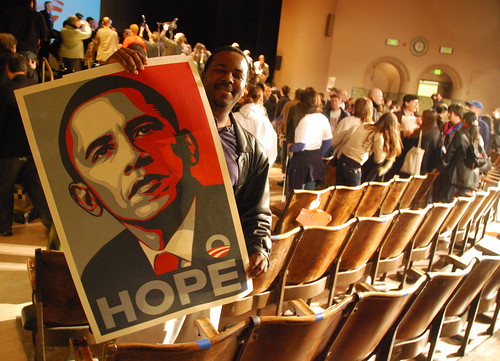
Monday, July 19, 2010
We Laugh at Danger and Break All the Rules
With the recent, untimely death by his own hands of my friend Jason “Old Boy” Kuzniarski, I felt that it was time to explore a little deeper just what it is I have been talking about in this forum, in order to try and help myself make sense of this event.
What exactly is this so-called “Self” of which I have been speaking?
The Self was one of the many discoveries made in the State of Nature that was brought back from the jungle, in order to be used to re-shape Society. In the State of Nature, Man’s greatest concern is Self-Preservation and his greatest fear is that of Violent Death. By Nature, he is a Solitary Individual, therefore, in order to live naturally, his greatest concern must be Self-Interest.
“Self” is the modern replacement for “Soul.” The idea of Soul went out of fashion after Machiavelli’s exhortations against the possibility of living according to Virtue and the lack of certitude about what exactly the Soul even is, despite 2,000 years of philosophy exploring this topic.
One of the first—if not the first—to have used “Self” in its modern sense was John Locke. He described it in An Essay Concerning Human Understanding in 1690 as, “that conscious thinking thing, whatever substance [it is] made up of…which is sensible or conscious of pleasure and pain, capable of happiness or misery, and so is concerned for itself, as far as that consciousness extends.” It forms a continuity that “unites existences and actions …in time into the same person: so whatever has the consciousness of present and past actions, is the same person to who they both belong.” The Self is one’s personal identity that is the result of the choices and experiences that occur throughout one’s life. It exists as an immaterial Consciousness or Ego, which acts as a storage unit that holds these life shaping moments, in the face of a very rapidly changing material body that is constant in flux.
But how would this natural way of living work within the confines of Society? It must be changed from pure Self-Interest into, what came to be called, Enlightened Self-Interest or Self-Interest Well Understood.
In Modern Philosophy, there was a sharp turn made (pretty much an “about-face” or 180˚ turn) away from cultivating or perfecting, seemingly impossible, Virtue toward the emancipation of personal Desire as the ordering principle of Society. It was a way to make the goal of Happiness much easier to realize. Instead of setting a person's two components—Body and Soul—against one another as the Ancients had with their demands of Virtue, if the second component Soul—or Self—is allowed to cooperate in the satisfactions of the Body—instead of being trained to restrain them—then the division in Man can be overcome and earthly satisfaction achieved.
This simple solution, however, was exploded by Rousseau in his critique of the new type of Man—The Bourgeois—that is the resultant of this new schema. He was quick to point out that Locke’s Natural Man would hardly be distinguishable from the rest of the Animal Kingdom and would not be industrious or rational, but rather idle and irrational—motivated exclusively by the Passions. Rousseau removed the floor from beneath Man—that Hobbes and Locke needed in order for their very simple plans to work—and helped to found the Modern Psychology of Self, popularized by Freud, which attempts to look at the Sub-conscious “Basement” to see what really lies beneath all our Rationality and Civility.
We keep chasing this Self back further and further into the jungles of the State of Nature, but its essence remains elusive and this understanding, more and more, comes to seem to be its essence. The Self now seems to be this mysterious, ineffable, indefinable, unlimited, creativity—knowable only thru its deeds. It has come to replace God—of which it is the impious mirror image—as the grounding for all motivation, action, and “values.” It’s become the source of all things. It now creates god(s) in its image, not vice-versa, as in the old Biblical stories.
This Self is also the anti-thesis of Nature—not bound by the Laws of Natural Science, it is the only source of Freedom in a mechanically, deterministic world. It’s emanations are now proof of Free Will, but are random swervings really the same thing as making a Free Choice? Our Psychology today posits that the Sub-conscious trumps the Rational Consciousness and, in reality, we are really at the mercy of something even worse than God’s Will: Unconscious Desire. We are simply this uncontrollable ball of emotions that are ready to burst out at any moment, with no mediating force to counter-balance.
In the Ancient conception of Man, the “Soul” was capable of exercising control over the Passions and pointed the lower motivations in Man toward higher goals and achievements. Man had a real Freedom that allowed him to order his world and, although he was still at the mercy of Nature/God, his Reason could aid in an ordering and hierarchy that gave Man power over his life.
Our current language of the "Self" has none of these edifying and inspiring components and the greatest change is that the good man used to be the one who cared for others, whereas now it is the one who cares exclusively for himself. Survivalism has replaced Heroism. Selfishness is now a good thing instead of a Moral Vice.
The word “Soul” expresses very different images and ideas than does the word “Self,” yet we have quietly accepted the substitution and the poverty of our language mirrors the poverty of our realities. We are told that Man is Self, and Self is naturally Selfish (period) whereas, Soul invokes images of divine and lofty goals and enterprises, and requires a Society dedicated to it in which this beauty can flourish. This whole dilemma becomes even more problematic when one of the most beautiful Souls I have ever met was an Atheist.
I wonder where an Atheist’s Soul goes when he dies?
What exactly is this so-called “Self” of which I have been speaking?
The Self was one of the many discoveries made in the State of Nature that was brought back from the jungle, in order to be used to re-shape Society. In the State of Nature, Man’s greatest concern is Self-Preservation and his greatest fear is that of Violent Death. By Nature, he is a Solitary Individual, therefore, in order to live naturally, his greatest concern must be Self-Interest.
“Self” is the modern replacement for “Soul.” The idea of Soul went out of fashion after Machiavelli’s exhortations against the possibility of living according to Virtue and the lack of certitude about what exactly the Soul even is, despite 2,000 years of philosophy exploring this topic.
One of the first—if not the first—to have used “Self” in its modern sense was John Locke. He described it in An Essay Concerning Human Understanding in 1690 as, “that conscious thinking thing, whatever substance [it is] made up of…which is sensible or conscious of pleasure and pain, capable of happiness or misery, and so is concerned for itself, as far as that consciousness extends.” It forms a continuity that “unites existences and actions …in time into the same person: so whatever has the consciousness of present and past actions, is the same person to who they both belong.” The Self is one’s personal identity that is the result of the choices and experiences that occur throughout one’s life. It exists as an immaterial Consciousness or Ego, which acts as a storage unit that holds these life shaping moments, in the face of a very rapidly changing material body that is constant in flux.
But how would this natural way of living work within the confines of Society? It must be changed from pure Self-Interest into, what came to be called, Enlightened Self-Interest or Self-Interest Well Understood.
In Modern Philosophy, there was a sharp turn made (pretty much an “about-face” or 180˚ turn) away from cultivating or perfecting, seemingly impossible, Virtue toward the emancipation of personal Desire as the ordering principle of Society. It was a way to make the goal of Happiness much easier to realize. Instead of setting a person's two components—Body and Soul—against one another as the Ancients had with their demands of Virtue, if the second component Soul—or Self—is allowed to cooperate in the satisfactions of the Body—instead of being trained to restrain them—then the division in Man can be overcome and earthly satisfaction achieved.
This simple solution, however, was exploded by Rousseau in his critique of the new type of Man—The Bourgeois—that is the resultant of this new schema. He was quick to point out that Locke’s Natural Man would hardly be distinguishable from the rest of the Animal Kingdom and would not be industrious or rational, but rather idle and irrational—motivated exclusively by the Passions. Rousseau removed the floor from beneath Man—that Hobbes and Locke needed in order for their very simple plans to work—and helped to found the Modern Psychology of Self, popularized by Freud, which attempts to look at the Sub-conscious “Basement” to see what really lies beneath all our Rationality and Civility.
We keep chasing this Self back further and further into the jungles of the State of Nature, but its essence remains elusive and this understanding, more and more, comes to seem to be its essence. The Self now seems to be this mysterious, ineffable, indefinable, unlimited, creativity—knowable only thru its deeds. It has come to replace God—of which it is the impious mirror image—as the grounding for all motivation, action, and “values.” It’s become the source of all things. It now creates god(s) in its image, not vice-versa, as in the old Biblical stories.
This Self is also the anti-thesis of Nature—not bound by the Laws of Natural Science, it is the only source of Freedom in a mechanically, deterministic world. It’s emanations are now proof of Free Will, but are random swervings really the same thing as making a Free Choice? Our Psychology today posits that the Sub-conscious trumps the Rational Consciousness and, in reality, we are really at the mercy of something even worse than God’s Will: Unconscious Desire. We are simply this uncontrollable ball of emotions that are ready to burst out at any moment, with no mediating force to counter-balance.
In the Ancient conception of Man, the “Soul” was capable of exercising control over the Passions and pointed the lower motivations in Man toward higher goals and achievements. Man had a real Freedom that allowed him to order his world and, although he was still at the mercy of Nature/God, his Reason could aid in an ordering and hierarchy that gave Man power over his life.
Our current language of the "Self" has none of these edifying and inspiring components and the greatest change is that the good man used to be the one who cared for others, whereas now it is the one who cares exclusively for himself. Survivalism has replaced Heroism. Selfishness is now a good thing instead of a Moral Vice.
The word “Soul” expresses very different images and ideas than does the word “Self,” yet we have quietly accepted the substitution and the poverty of our language mirrors the poverty of our realities. We are told that Man is Self, and Self is naturally Selfish (period) whereas, Soul invokes images of divine and lofty goals and enterprises, and requires a Society dedicated to it in which this beauty can flourish. This whole dilemma becomes even more problematic when one of the most beautiful Souls I have ever met was an Atheist.
I wonder where an Atheist’s Soul goes when he dies?
Thursday, July 8, 2010
Won't You Be My Neighbor?
From a very early age, there have been two messages that have been hammered into our brains that are supposed to shape our vision of our-Selves and our relations with Others.
1) Deep down, we are all special, unique Individuals.
2) Deep down, we are all the same—we are all just humans being.
The point of this education is two-fold. First, it is supposed to build Self-Esteem—we are all special and unique and there is no one else in the world quite like us. When others try to push their agendas on us and force us to contort ourselves in un-natural ways, we end up maiming our true-Selves causing unnecessary pain and frustration. We should only be who we want to be and everyone else be damned. The second part of the message is supposed to combat Racism and Intolerance and illustrate the “fact” that was found back in the State of Nature: we are all Equal and any sort of arrangement contradicting that is illegitimate and can be overthrown. Underneath our exterior, superficial differences, we are all just Human Beings trying to get by in this world and live some sort of life of meaning.
This contradiction has been coined as The Fundamental Tension of Modern Life. We all want to be unique, self-reliant Individuals who live with a unique purpose, which transcends the banality of everyday Bourgeois life, but there is also this pull that makes us want to be part of something bigger than our-Selves that will connect us with eternity. But how is one suppose to reconcile these two seemingly incompatible ends?
Rousseau was so worried about this contradiction that he felt the only solution was to “De-nature” Man in order to fit him into Society—the process of which he described in The Social Contract, in 1762. In order to reconcile Man to Society we must be capable of “changing Human Nature; of transforming each Individual who by himself [in the State of Nature] is a perfect and solitary whole into a part of a larger whole from which that Individual would as it were receive his life and his being; of substituting a partial and moral existence for the independent and physical existence we have all received by Nature.”
Yet, somehow today we preach these contradictory impulses to little children—completely unequipped to deal with this necessarily frustrating aspect of our Nature—then pat them on their heads and send them on their way, while never recognizing the incoherence that lies behind this instruction.
How can we be different and identical at the same time?
We have found the best way to resolve it is by just never bringing it up. Just sweep it under the carpet because exploring it can have dire consequences and the strategies that have thus far been prescribed have lead to less than desirable results. The complete abnegation and suppression of the Individual and the Rights accordant to them was played out in the atrocities of brutal Communist Regimes throughout the 20th Century; and the self-evident evil of not recognizing every Individuals inherent humanity has played throughout all of Human history.
So, whereas, once again there is a plausible end that is trying be reached by the premises of our current wisdom, our current methodology is cracking around the edges and is showing signs of decay. Romanticized, wishful thinking only gets you so far because it is necessarily based on a fallacy, which has no basis in Nature and is usually created in order to make up for what is seen as a perceived failing of our Nature.
Is Man by Nature a Solitary Being? Was Man ever an individual, singular Whole at any point in our History or can we only receive completeness in union with another/others? Maybe inner contradiction and the resultant attempts at reconciliation are the source of Man’s greatness and we are never destined for the peace and happiness promised by our Regime?
Our current wisdom says that if people follow these mutually exclusive and contradictory impulses to the max, then they will achieve inner peace and Society will live in harmony. I wouldn't hold your breathe.
Wednesday, June 30, 2010
Bellum Omnium Contra Omnes
The aspect of Rousseau’s critique of Liberalism that I want to focus on for this post is the phenomenon that is the primary result of this new system: The Bourgeois. This type of person has been the bane of every Philosopher and Artist—on the Left and the Right—since Rousseau first gave him a name in his work Émile in 1762.
Rousseau said that he is a result of a mistake made by Locke: “He who in the Civil order wants to preserve the primacy of the sentiments of Nature [Self-Preservation and Self-Interest] does not know what he wants.” To him, The Bourgeois is stuck in the middle of what he feels are two very respectable extremes: 1) the good, Natural Man, as found in the State of Nature; and 2) the Moral (de-natured) Citizen of the ancient Republics in Greece and Rome. He is constantly divided by his Natural Inclinations and the demands of Social Duty. The conflict between Self-love and love of Others, Inclination and Duty, Sincerity and Hypocrisy, being one-Self and being Alienated has pervaded all modern discussion of the Human Condition since Rousseau’s critique of Liberalism.
When a Bourgeois thinks of others, he only considers how the interaction is going to benefit himself; yet, when he tries to think about himself, his only conception is in comparison to others, with no inner metric of Self-worth.
Bourgeois and Middle Class can be used interchangeably, but, where as Bourgeois is always used with derision, Middle Class in America has always been thought to be a good, desirable thing to be. It is a status the poor strive for and a demographic Politicians always pander to because a majority of Americans fall within it (depending, of course, on your definition of Middle Class). In Marxist theory, The Bourgeois is despicable because they are the buffer that allows the Capitalist system to continue and perpetuate itself; for Artists they are contemptible because they are un-poetic, un-erotic, and un-heroic—and their religion is empty and mostly just for show. They have neither longings for greatness nor enthusiasm for life and merely accept the world the way it is, in a passionless reconciliation with “Reality.”
The Bourgeois can be directly related with, what Locke called, the “Industrious and Rational” Man that he required in order for his system to work. He was a new type of Man that made the Politics of Consent—as opposed to politics based on Myth—work. He consults his Reason and sees that, by incorporating with other men, he can get a lot more done and better protect himself (i.e. preserve him-Self), but only will consent to a Government that protects his Individual Rights (the Natural Rights he possesses, which predate Government and Society).
Throughout American history there have been people who have spoke out against this type of system—most notably Thoreau in his book Walden in 1854 and the Transcendentalists—but for the most part it has been accepted and has helped America to become the Industrial and Technological behemoth that it is today. The latest and most far-reaching of these Counter-Movements occurred in the 1960’s and has completely transformed the face of America. Although beginning with legitimate claims against American society and the Government—Civil Rights and opposition to the War in Vietnam among others—their solution and method for enacting their social change, I would say in the end, has done much more harm than good.
Their Philosophy was an incongruous mixture of Marxist collectivist communalism paired with a Nietzschean over-emphasis on a free-spirited Individualism. (And don’t forget the Freudian rejection of society as a repressive agent of neuroses and unhappiness, as if we could possibly return to the State of Nature after all of our History that has moved us so far away from it.) Although, both Marx and Nietzsche hated The Bourgeois, they approached the problem from completely different vantage points—the modern Left/Right dichotomy—and to think the two could be combined is completely foolish and is based on nothing but wishful thinking.
There are very legitimate claims that can be made against our Government and our Culture—and have been made by many Thinkers even before America was created—but the solutions of the Sixties have failed. And far from reforming or transforming Bourgeois Society, their ideas have instead led to the greatest opportunities for growth “The System” could have ever hoped for. The Counter-Culture has now become part and parcel of the Consumer-Culture. There is no differentiation between Bourgeois and Bohemian anymore other than the style of dress and the dichotomy has collapsed in upon itself. Denim may have replaced Khaki on our University Campuses, but those pants were still bought at a store that fully participates in every unsavory practice that our Capitalist system was built on: unsafe factories, low wages, child labor, natural degradation, marketing—the lists goes on and on.
The true result of the Sixties Philosophy came to a head in the Eighties and was personified by the Me! Me! Me! Generation and can be best described by the phrase, “Whoever dies with the most toys, wins!” When the contradiction of Community through Individuality became manifest, there was no longer anything left to stop the excesses of Capitalism because another part of Sixties Ideology was rejection of the past/attempt to kill History (at least Western History). This meant two things: 1) the Religion that made people at least stop and think about the state of their souls for two seconds had disappeared; and 2) all those great Thinkers that proposed alternatives or modifications/correctives to our System had been forgotten as well.
We are now Solitary Individuals, being kept afloat by life-boats in the middle of a vast, empty ocean, with no connection to History, no connection to our Community, no connection to our Country, and with only an abstract connection with the rest of Humanity.
“These are the times that try Men's souls. The summer soldier and the sunshine patriot will, in this crisis, shrink from the service of their country; but he that stands by it now, deserves the love and thanks of man and woman. Tyranny, like hell, is not easily conquered; yet we have this consolation with us, that the harder the conflict, the more glorious the triumph. What we obtain too cheap, we esteem too lightly: it is dearness only that gives every thing its value. Heaven knows how to put a proper price upon its goods; and it would be strange indeed if so celestial an article as FREEDOM should not be highly rated.”
—Thomas Paine Crisis December 23, 1776
Rousseau said that he is a result of a mistake made by Locke: “He who in the Civil order wants to preserve the primacy of the sentiments of Nature [Self-Preservation and Self-Interest] does not know what he wants.” To him, The Bourgeois is stuck in the middle of what he feels are two very respectable extremes: 1) the good, Natural Man, as found in the State of Nature; and 2) the Moral (de-natured) Citizen of the ancient Republics in Greece and Rome. He is constantly divided by his Natural Inclinations and the demands of Social Duty. The conflict between Self-love and love of Others, Inclination and Duty, Sincerity and Hypocrisy, being one-Self and being Alienated has pervaded all modern discussion of the Human Condition since Rousseau’s critique of Liberalism.
When a Bourgeois thinks of others, he only considers how the interaction is going to benefit himself; yet, when he tries to think about himself, his only conception is in comparison to others, with no inner metric of Self-worth.
Bourgeois and Middle Class can be used interchangeably, but, where as Bourgeois is always used with derision, Middle Class in America has always been thought to be a good, desirable thing to be. It is a status the poor strive for and a demographic Politicians always pander to because a majority of Americans fall within it (depending, of course, on your definition of Middle Class). In Marxist theory, The Bourgeois is despicable because they are the buffer that allows the Capitalist system to continue and perpetuate itself; for Artists they are contemptible because they are un-poetic, un-erotic, and un-heroic—and their religion is empty and mostly just for show. They have neither longings for greatness nor enthusiasm for life and merely accept the world the way it is, in a passionless reconciliation with “Reality.”
The Bourgeois can be directly related with, what Locke called, the “Industrious and Rational” Man that he required in order for his system to work. He was a new type of Man that made the Politics of Consent—as opposed to politics based on Myth—work. He consults his Reason and sees that, by incorporating with other men, he can get a lot more done and better protect himself (i.e. preserve him-Self), but only will consent to a Government that protects his Individual Rights (the Natural Rights he possesses, which predate Government and Society).
Throughout American history there have been people who have spoke out against this type of system—most notably Thoreau in his book Walden in 1854 and the Transcendentalists—but for the most part it has been accepted and has helped America to become the Industrial and Technological behemoth that it is today. The latest and most far-reaching of these Counter-Movements occurred in the 1960’s and has completely transformed the face of America. Although beginning with legitimate claims against American society and the Government—Civil Rights and opposition to the War in Vietnam among others—their solution and method for enacting their social change, I would say in the end, has done much more harm than good.
Their Philosophy was an incongruous mixture of Marxist collectivist communalism paired with a Nietzschean over-emphasis on a free-spirited Individualism. (And don’t forget the Freudian rejection of society as a repressive agent of neuroses and unhappiness, as if we could possibly return to the State of Nature after all of our History that has moved us so far away from it.) Although, both Marx and Nietzsche hated The Bourgeois, they approached the problem from completely different vantage points—the modern Left/Right dichotomy—and to think the two could be combined is completely foolish and is based on nothing but wishful thinking.
There are very legitimate claims that can be made against our Government and our Culture—and have been made by many Thinkers even before America was created—but the solutions of the Sixties have failed. And far from reforming or transforming Bourgeois Society, their ideas have instead led to the greatest opportunities for growth “The System” could have ever hoped for. The Counter-Culture has now become part and parcel of the Consumer-Culture. There is no differentiation between Bourgeois and Bohemian anymore other than the style of dress and the dichotomy has collapsed in upon itself. Denim may have replaced Khaki on our University Campuses, but those pants were still bought at a store that fully participates in every unsavory practice that our Capitalist system was built on: unsafe factories, low wages, child labor, natural degradation, marketing—the lists goes on and on.
The true result of the Sixties Philosophy came to a head in the Eighties and was personified by the Me! Me! Me! Generation and can be best described by the phrase, “Whoever dies with the most toys, wins!” When the contradiction of Community through Individuality became manifest, there was no longer anything left to stop the excesses of Capitalism because another part of Sixties Ideology was rejection of the past/attempt to kill History (at least Western History). This meant two things: 1) the Religion that made people at least stop and think about the state of their souls for two seconds had disappeared; and 2) all those great Thinkers that proposed alternatives or modifications/correctives to our System had been forgotten as well.
We are now Solitary Individuals, being kept afloat by life-boats in the middle of a vast, empty ocean, with no connection to History, no connection to our Community, no connection to our Country, and with only an abstract connection with the rest of Humanity.
“These are the times that try Men's souls. The summer soldier and the sunshine patriot will, in this crisis, shrink from the service of their country; but he that stands by it now, deserves the love and thanks of man and woman. Tyranny, like hell, is not easily conquered; yet we have this consolation with us, that the harder the conflict, the more glorious the triumph. What we obtain too cheap, we esteem too lightly: it is dearness only that gives every thing its value. Heaven knows how to put a proper price upon its goods; and it would be strange indeed if so celestial an article as FREEDOM should not be highly rated.”
—Thomas Paine Crisis December 23, 1776
Sunday, June 27, 2010
The Party's Over
Loss of Human Dignity? That is a pretty high price to pay. Why did Kant feel that this new system—which he ultimately agreed with—had such a high cost, especially when you think about all the great things that were gained from it: Freedom of Speech, Freedom of Religion, the Right to vote and have a say in the functioning of your Government, and a whole plethora of other Rights to protect the Individual.
To find the answer to that question we must look to the other half of the Modern American dichotomy: Jean-Jacques Rousseau (who I indicated earlier as the basis for the current crop of Liberals today).
Rousseau wrote about 60 years after Locke’s highly influential book Two Treaties on Civil Government, and started off his thought in fundamental agreement with Locke. He agreed with him about the origins of society in the State of Nature and the principles of Freedom and Equality for all Men, but drew very, very different conclusions about how society should be set up to ensure those principles.
Locke (following in the footsteps of Machiavelli) thought—since 2000 years of philosophizing and preaching had been completely ineffectual against Man’s natural desires and the methods that had been created in order to do so led to such great torment (sin, the threat of Hell)—that we may as well act as we naturally are, instead of how we ought to be and that would lead to happiness. Man is naturally Selfish, and his two main concerns are Self-preservation and Self-Interest. But, Locke thought, if Self-Interest could be trained to be Enlightened Self-Interest—where Man has the Right to believe whatever he wants, say whatever he wants, and be whatever he wants, but must also recognize the same Right for everyone else—then Society would be much more peaceful and prosperous and the Individual much more content.
These ideas began to spread throughout Europe like wildfire by men known as the Philosophes—popularizers of Enlightenment thought—and people everywhere began to realize that all the old loyalties—God, heredity, social class, age and even gender—were simply myths used to keep the People down and resigned to be content with their miserable living conditions. Locke and the rest of the Enlighteners rationalized everything till all tradition and convention was left without a leg upon which to stand—till it seemed like anything was possible.
This is the backdrop upon which Rousseau entered on the wings of a scathing critique of Enlightenment thought, in his Discourse on the Arts and Sciences, that completely destroyed its confidence right at its grand moment of triumph. His insights were nuanced looks at the Human Condition that peered much more deeply than Locke’s philosophy into the phenomenon known as Man to try and explore the results of this new philosophy of Individualism and what it actually meant for people’s lives: for Politics and Community, Love and Friendship, Morals and Art, and even Human Purpose.
And Kant, following in Rousseau’s footsteps, saw the degradation to human relationships that would result from this over-emphasis of the Individual and attempted to re-shape Enlightenment thought to make up for these supposed deficiencies. Kant was the last great Enlightenment Philosopher and all Movements and Political Programs—ranging from Romanticism to Communism to Fascism—that have come after him have been a result of the perceived failure of Kant, and of the initial Enlighteners, to adequately account for the Human Condition and to give a place to an exclusively Human quality that would separate us from the determinism of Natural phenomenon and the Animal Kingdom.
I will delve more deeply in posts to come into the critique made by Rousseau that has been so persuasive that it has shaped all of Western history since him…
To find the answer to that question we must look to the other half of the Modern American dichotomy: Jean-Jacques Rousseau (who I indicated earlier as the basis for the current crop of Liberals today).
Rousseau wrote about 60 years after Locke’s highly influential book Two Treaties on Civil Government, and started off his thought in fundamental agreement with Locke. He agreed with him about the origins of society in the State of Nature and the principles of Freedom and Equality for all Men, but drew very, very different conclusions about how society should be set up to ensure those principles.
Locke (following in the footsteps of Machiavelli) thought—since 2000 years of philosophizing and preaching had been completely ineffectual against Man’s natural desires and the methods that had been created in order to do so led to such great torment (sin, the threat of Hell)—that we may as well act as we naturally are, instead of how we ought to be and that would lead to happiness. Man is naturally Selfish, and his two main concerns are Self-preservation and Self-Interest. But, Locke thought, if Self-Interest could be trained to be Enlightened Self-Interest—where Man has the Right to believe whatever he wants, say whatever he wants, and be whatever he wants, but must also recognize the same Right for everyone else—then Society would be much more peaceful and prosperous and the Individual much more content.
These ideas began to spread throughout Europe like wildfire by men known as the Philosophes—popularizers of Enlightenment thought—and people everywhere began to realize that all the old loyalties—God, heredity, social class, age and even gender—were simply myths used to keep the People down and resigned to be content with their miserable living conditions. Locke and the rest of the Enlighteners rationalized everything till all tradition and convention was left without a leg upon which to stand—till it seemed like anything was possible.
This is the backdrop upon which Rousseau entered on the wings of a scathing critique of Enlightenment thought, in his Discourse on the Arts and Sciences, that completely destroyed its confidence right at its grand moment of triumph. His insights were nuanced looks at the Human Condition that peered much more deeply than Locke’s philosophy into the phenomenon known as Man to try and explore the results of this new philosophy of Individualism and what it actually meant for people’s lives: for Politics and Community, Love and Friendship, Morals and Art, and even Human Purpose.
And Kant, following in Rousseau’s footsteps, saw the degradation to human relationships that would result from this over-emphasis of the Individual and attempted to re-shape Enlightenment thought to make up for these supposed deficiencies. Kant was the last great Enlightenment Philosopher and all Movements and Political Programs—ranging from Romanticism to Communism to Fascism—that have come after him have been a result of the perceived failure of Kant, and of the initial Enlighteners, to adequately account for the Human Condition and to give a place to an exclusively Human quality that would separate us from the determinism of Natural phenomenon and the Animal Kingdom.
I will delve more deeply in posts to come into the critique made by Rousseau that has been so persuasive that it has shaped all of Western history since him…
Subscribe to:
Posts (Atom)